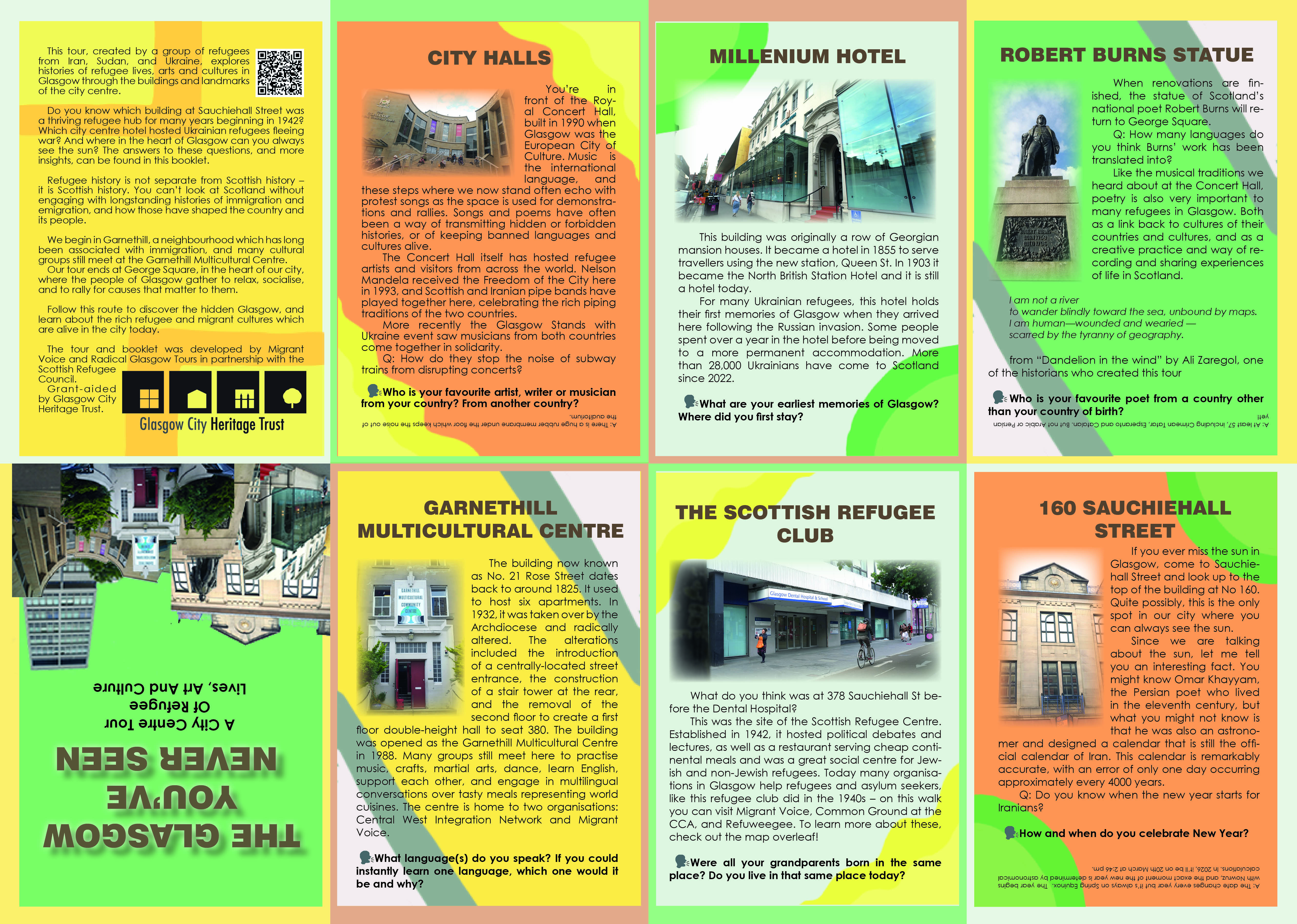
This tour, created by a group of refugees from Iran, Sudan, and Ukraine, explores histories of refugee lives, arts and cultures in Glasgow through the buildings and landmarks of the city centre.
Do you know which building at Sauchiehall Street served as a thriving refugee hub for many years beginning in 1942? Which city centre hotel hosted Ukrainian refugees fleeing war? And where in the heart of Glasgow can you always see the sun? The answers to these questions, and more insights, can be found on this tour.
Refugee history is not separate from Scottish history – it is Scottish history. You can’t look at Scotland without engaging with longstanding histories of immigration and emigration, and how those have shaped the country and its people.
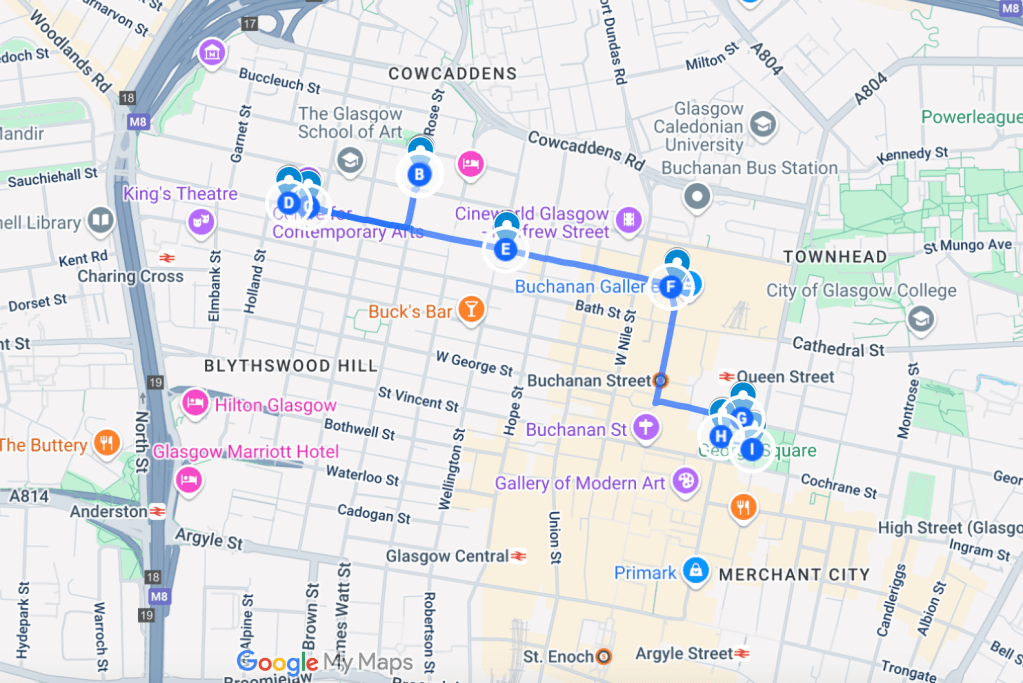
Accessibility: This walk lasts 2km on city pavements and will take you around an hour. There is one steep hill on the route as shown (Scott St); to avoid this you can access Sauchiehall St via Rose St. At the time of writing George Square is closed, meaning seating on the walk is reduced. Some benches are available on Sauchiehall Street. Accessible toilets are available in the Buchanan Galleries during opening hours. For detailed walking directions click on the map:
As you walk between stops on this tour, we invite you to use the 🗣️ prompts to reflect on your own histories of culture, migration and the city of Glasgow.
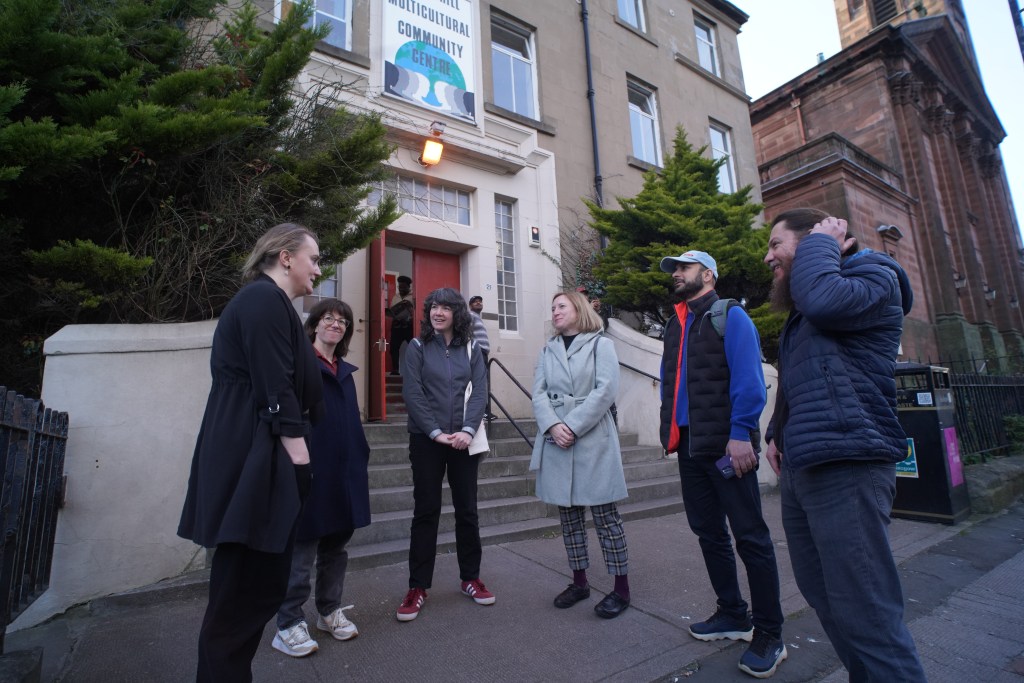
Stop 1: Garnethill Multicultural Centre, 21 Rose Street
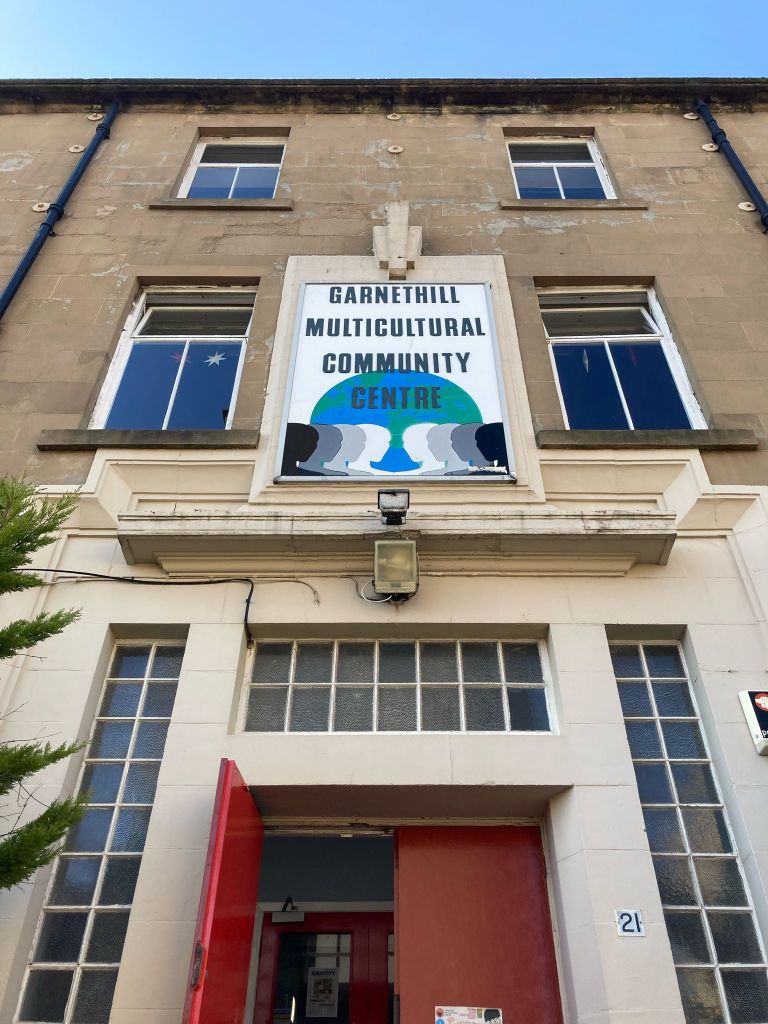
We begin in Garnethill, a neighbourhood which has long been associated with immigration. The synagogue on Hill Street represents the large Jewish community which once lived here, while many cultural groups still meet at the Garnethill Multicultural Centre.
The building now known as No. 21 Rose Street dates back to around 1825. It used to host six apartments. In 1932, it was taken over by the Archdiocese and radically altered. The alterations included the introduction of a centrally-located street entrance, the construction of a stair tower at the rear, and the removal of the second floor to create a first floor double-height hall to seat 380.
The building was opened as the Garnethill Multicultural Centre in 1988. Many groups still meet here to practise music, crafts, martial arts, dance, learn English, support each other, and engage in multilingual conversations over tasty meals representing world cuisines. The centre is home to two organisations: Central & West Integration Network and Migrant Voice.
🗣️ What language(s) do you speak? If you could instantly learn one language, which one would it be and why?
Stop 2: Migrant Voice
How did people get involved with this project? Here, two of the historians explain:
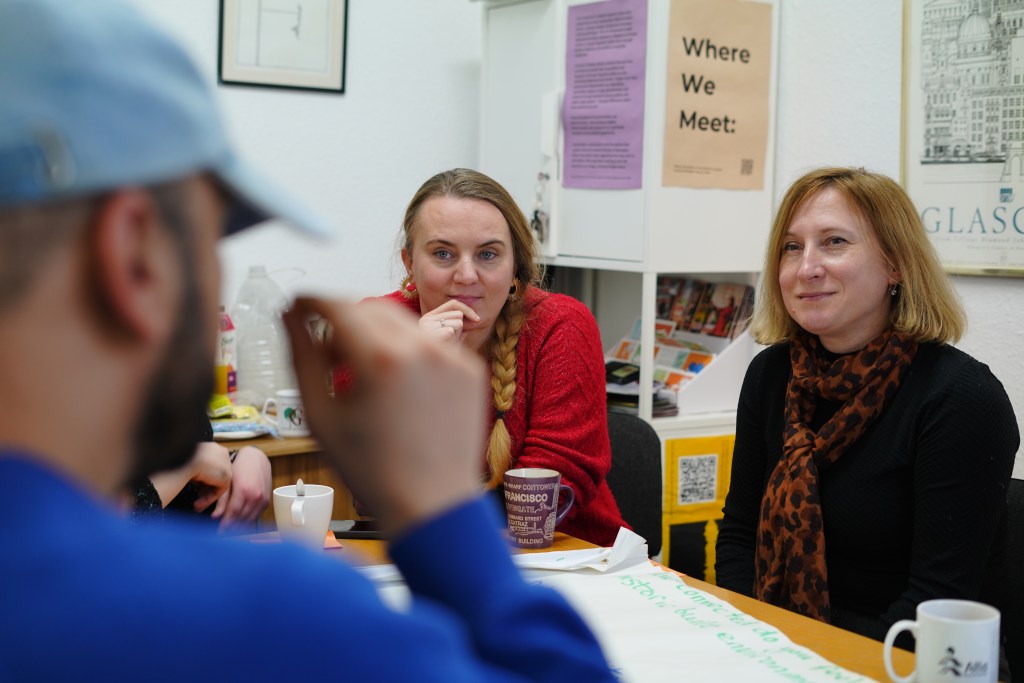
In Ukraine I worked as a graphic designer, also as a newspaper editor in a printing house.
I am really happy to be a volunteer with Migrant Voice. My main role has been designing monthly zines which share stories written by people from different cultural backgrounds. It is a good team of professionals. Here I was helped to quickly learn a new graphic design programme.
I love volunteering because I get a great experience and it helps improve my English skills.
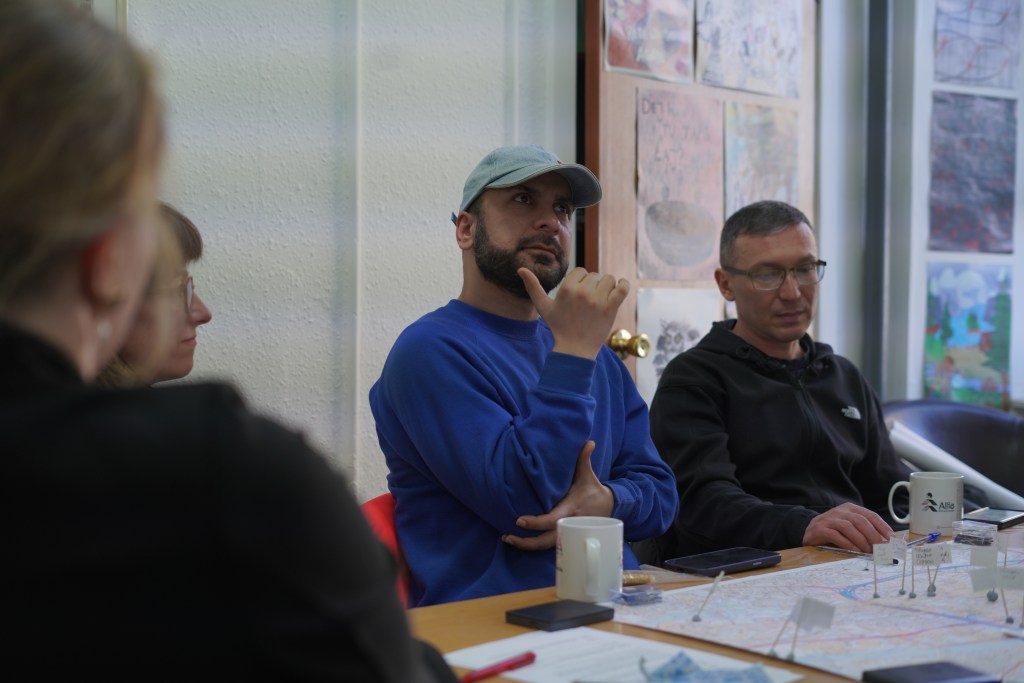
My name is Ali. I’m going to tell you a short story about a long journey. I’m an introverted person, and acting as a tour guide was one of the last things I could have imagined for myself. I came to this country as an operating theatre nurse, and life took me to baking bread in the bakery section of a supermarket.
A few months ago, one of the customers took a photo of me and my partner while we were working in the bakery, and it was displayed in an exhibition about refugees. She asked me to write a poem for the opening ceremony of that exhibition.
That poem and that photo were like a gateway that took me from my quiet corner in a bakery into a new world with lots of new people. This change has been a kind of journey from the inside out for me. That customer was none other than Marzanna, and this is the story of how I got to know Migrant Voice.
Stop 3: CCA and Common Ground, 350 Sauchiehall Street
Q: what connects Whoopi Goldberg with the CCA?
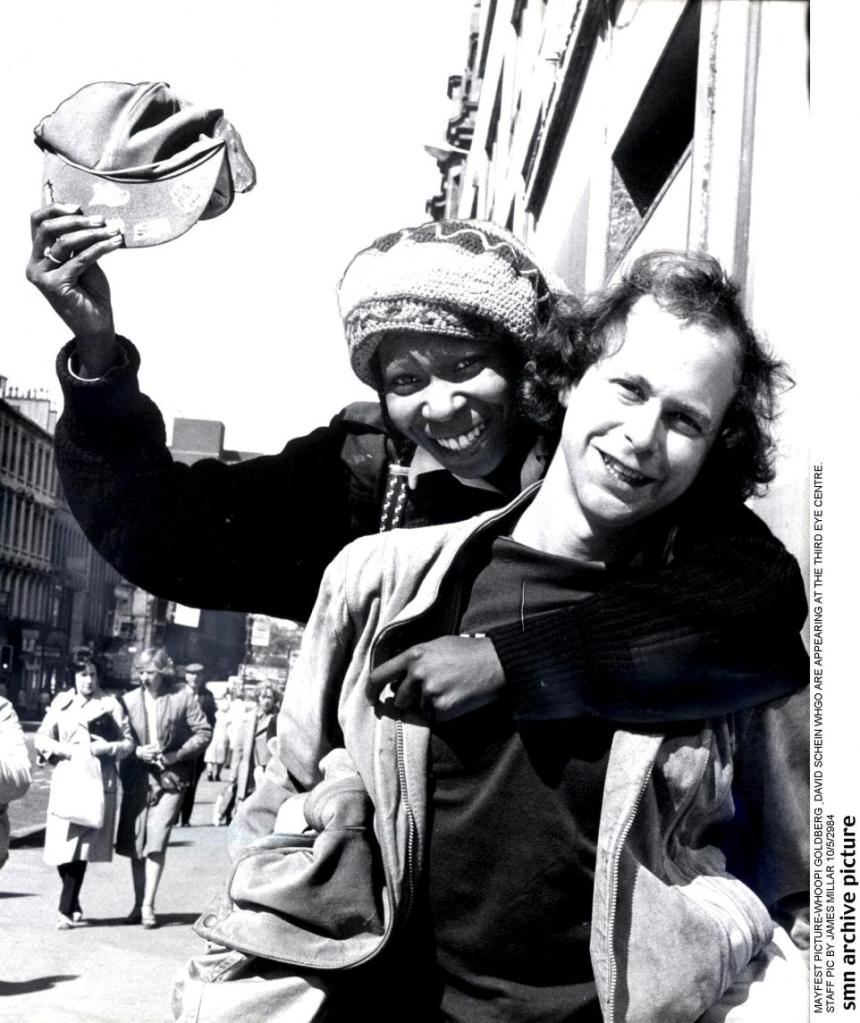
She performed here as a young unknown, in 1984 as part of Mayfest. Now the CCA (Centre for Contemporary Arts), this used to be the Third Eye Centre, an avant garde arts venue.
This beautiful building was originally built to house shops and warehouses in the 1860s, designed by the famous Glasgow architect Alexander ‘Greek’ Thompson.
Common Ground, which now occupies part of the ground floor of the building, isn’t only a space for creative initiatives, but also a platform created to support refugees, migrants, and all those who have experienced forced displacement.
Stop 4: Former Scottish Refugee Club
What do you think was at 378 Sauchiehall St before the Dental Hospital?
This was the site of the Scottish Refugee Centre. Established in 1942, it hosted political debates and lectures, as well as a restaurant serving cheap continental meals and was a great social centre for Jewish and non-Jewish refugees.
Today many organisations in Glasgow help refugees and asylum seekers, like this refugee club did in the 1940s. On today’s short route we will pass four of them: Migrant Voice, Central & West Integration Network, Common Ground at the CCA, and Refuweegee.
🗣️ Were all your grandparents born in the same place? Do you live in that same place today?
Stop 5: Sunshine on Sauchiehall Street
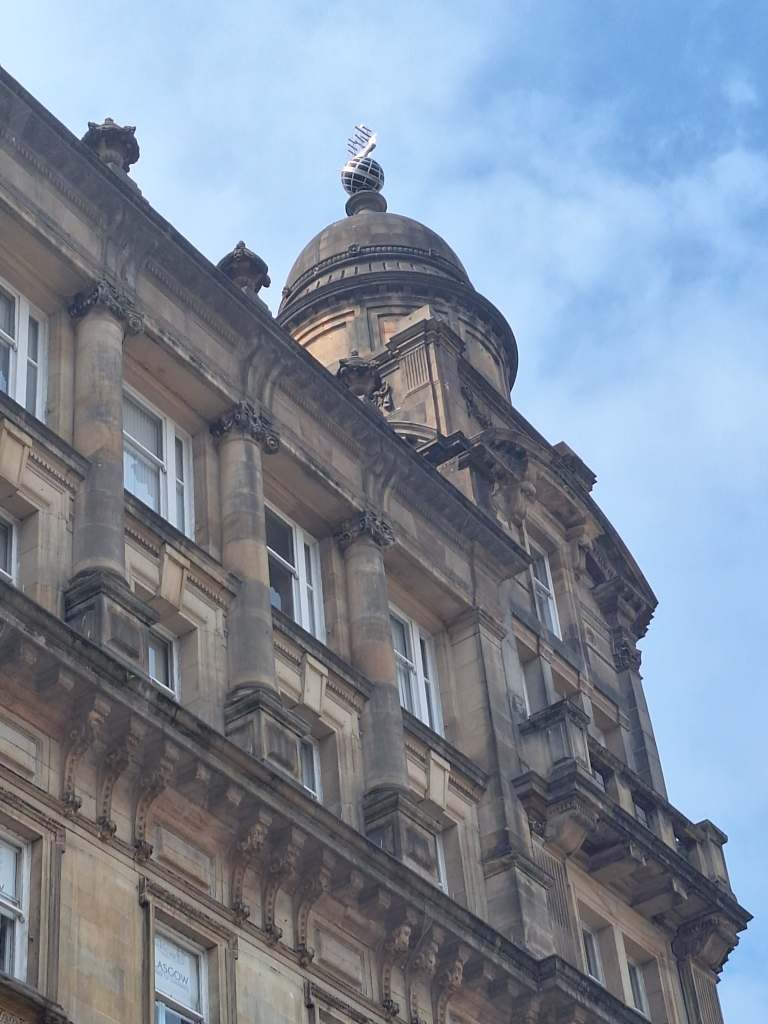
If you ever miss the sun in Glasgow, come to Sauchiehall Street and look up to the top of the building at No 160. Quite possibly, this is the only spot in our city where you can always see the sun.

Since we are talking about the sun, here’s an interesting fact. You might know Omar Khayyam, the Persian poet who lived in the eleventh century, but what you might not know is that he was also an astronomer and designed a calendar that is still the official calendar of Iran. This calendar is remarkably accurate, with an error of only one day occurring approximately every 4000 years.
🗣️ How and when do you celebrate New Year?
Stop 6: Royal Concert Hall, Sauchiehall Street
You’re now in front of the Royal Concert Hall, built in 1990 when Glasgow was the European City of Culture. Music is the international language, and these steps where we now stand often echo with protest songs as the space is used for demonstrations and rallies. Songs and poems have often been a way of transmitting hidden or forbidden histories, or of keeping banned languages and cultures alive.
The Concert Hall itself has hosted refugee artists and visitors from across the world. Nelson Mandela received the Freedom of the City here in 1993, and Scottish and Iranian bagpipe players have performed together here, celebrating the rich piping traditions of the two countries.
More recently the Glasgow Stands with Ukraine event saw musicians from both countries come together in solidarity.
🗣️ Who is your favourite artist, writer or musician from your country? From another country?
Stop 7: Millenium Hotel, George Square
This building was originally a row of Georgian mansion houses. It became a hotel in 1855 to serve travellers using the new station, Queen St. In 1903 it became the North British Station Hotel and it is still a hotel today.
For many Ukrainian refugees, this hotel holds their first memories of Glasgow when they arrived here following the Russian invasion. Some people spent over a year in the hotel before being moved to a more permanent accommodation. More than 28,000 Ukrainians have come to Scotland since 2022.
🗣️ What are your earliest memories of Glasgow? Where did you first stay?
Stop 8: 24 George Square
This building is called the Merchants House of Glasgow. It was important in the past and is still used today.
The sailing ship on top of the building shows how important ships and sea travel were to Glasgow, especially in the 1700s. At that time, many merchants in Glasgow became rich from the tobacco trade. The tobacco came from plantations in America where enslaved people worked.
A few doors along, we see the new place of Refuweegee. Refuweegee is one of many organisations in Glasgow that help refugees and asylum seekers. This continues the work of the refugee club from the 1940s that we saw on Sauchiehall Street.
Refuweegee gives people useful help and a friendly place to meet, talk, and make friends. They give welcome packs to new arrivals. They also run a conversation club, craft workshops, a community shop, and fun events.
Groups like Refuweegee do many things. You can go to events, help as a volunteer, or raise money. You can meet new people, learn about other cultures, and make beautiful things. It’s a great way to feel part of a strong and friendly community.
Stop 9: Robert Burns, George Square
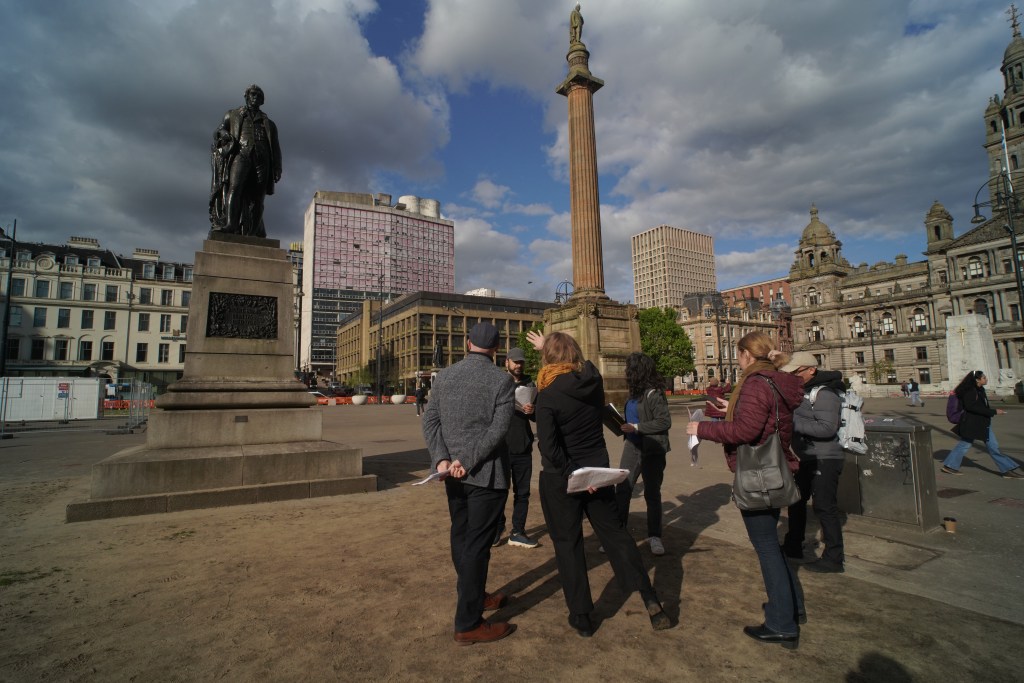
Our tour ends at George Square, in the heart of our city, where the people of Glasgow gather to relax, socialise, and to rally for causes that matter to them.

When renovations are finished, this statue of Scotland’s national poet Robert Burns will return to George Square.
Like the musical traditions we heard about at the Concert Hall, poetry is also very important to many refugees in Glasgow. Both as a link back to cultures of their countries and cultures, and as a creative practice and way of recording and sharing experiences of life in Scotland.
I am not a river
to wander blindly toward the sea, unbound by maps.
I am human—wounded and wearied—
scarred by the tyranny of geography.
from “Dandelion in the wind” by Ali Zaregol, one of the historians who created this tour
🗣️ Who is your favourite poet from a country other than your country of birth?
The tour was developed by Oksana Borysova, Osama Daffalla, Yuliia Drymalyk, Lenur Sufianov and Ali Zaregol. Alongside Marzanna Antoniak of Migrant Voice and Katherine Mackinnon of Radical Glasgow Tours, in partnership with the Scottish Refugee Council. Grant-aided by Glasgow City Heritage Trust for Refugee Festival Scotland 2025.
Original photography by Osama Daffalla
Booklet design by Yuliia Drymalyk
Bonus: Quiz! (answers below)
1. Do you know when the new year starts for Iranians?
2. How do they stop the noise of subway trains from disrupting concerts at the Royal Concert Hall?
3. How many languages do you think Robert Burns’ work has been translated into?
Answers:
- The date changes every year but it’s always on Spring Equinox. The year begins with Nowruz, and the exact moment of the new year is determined by astronomical calculations. In 2026, it’ll be on 20th March at 2:46 pm.
- There is a huge rubber membrane under the floor which keeps the noise out of the auditorium.
- At least 57, including Crimean Tatar, Esperanto and Catalan. But not Arabic or Persian (yet)!
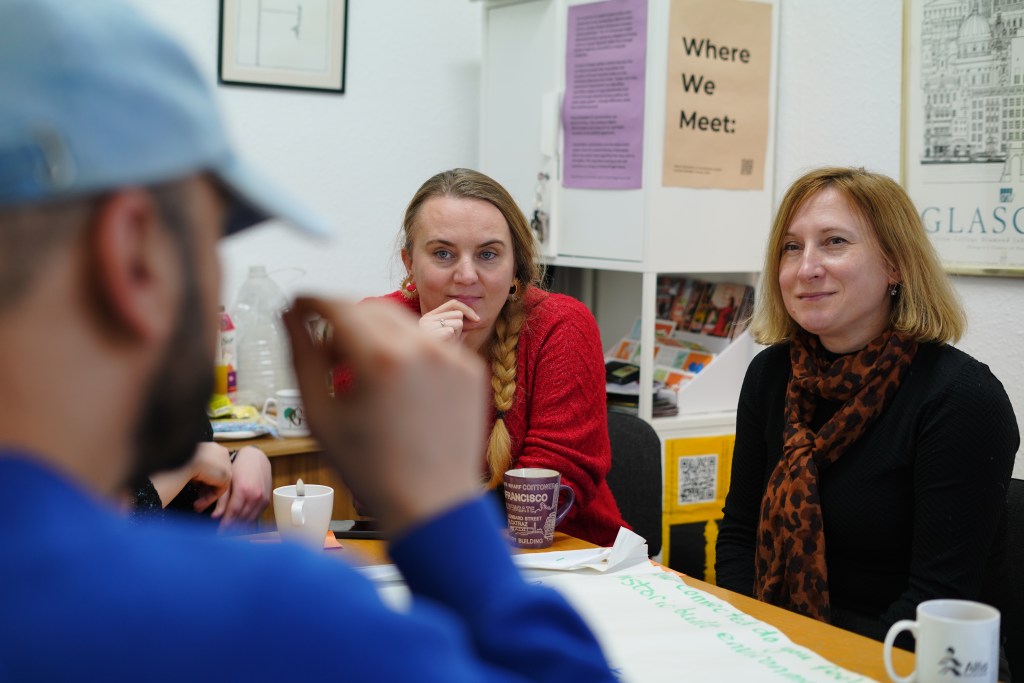
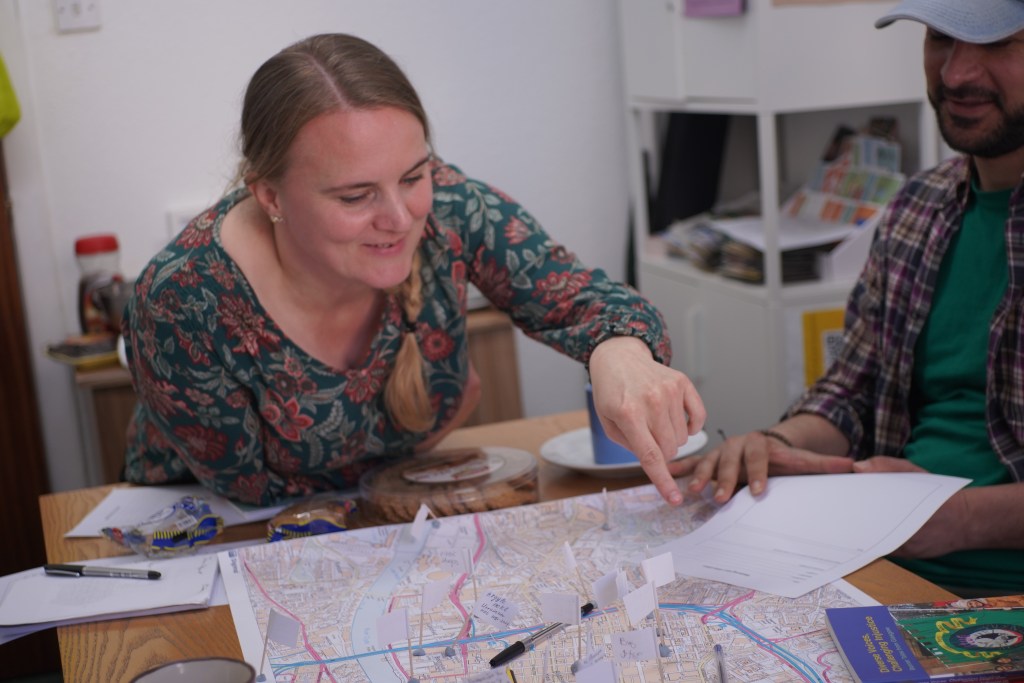
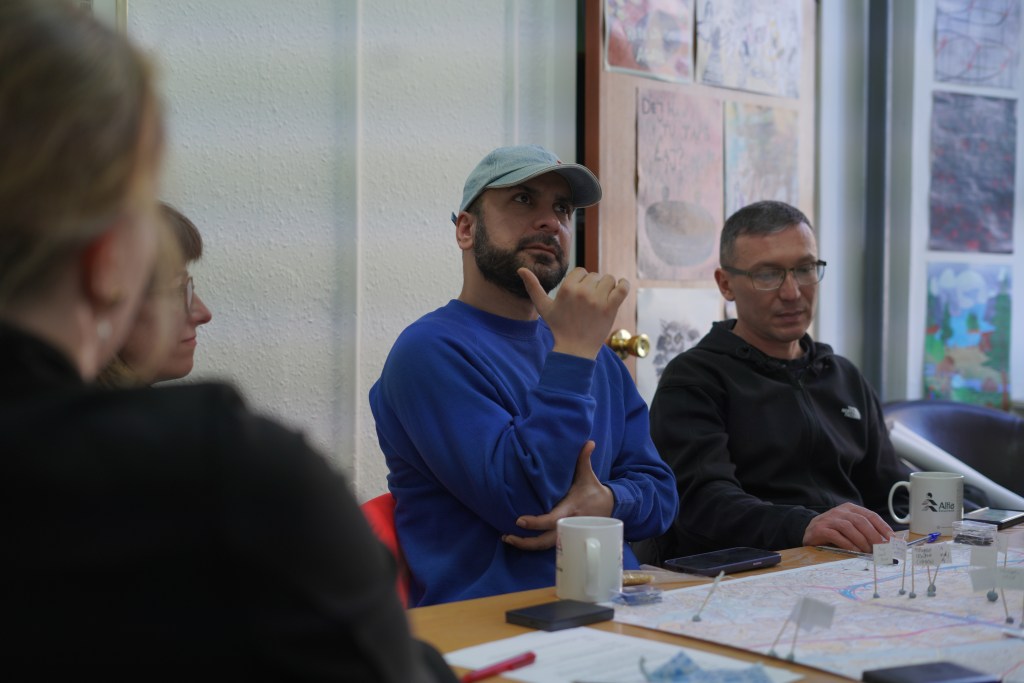
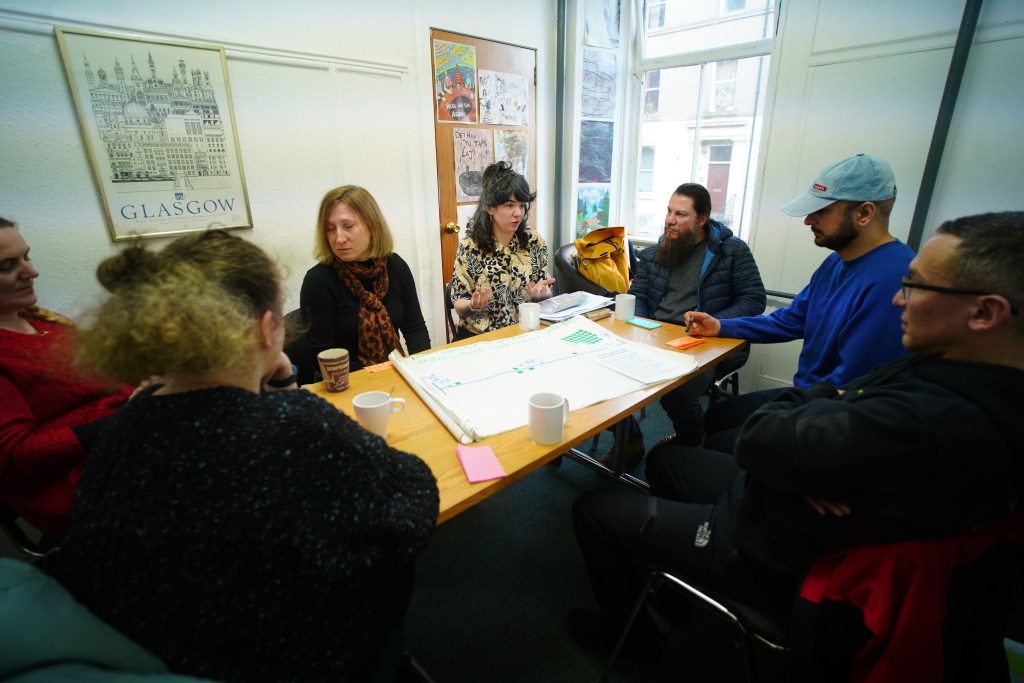
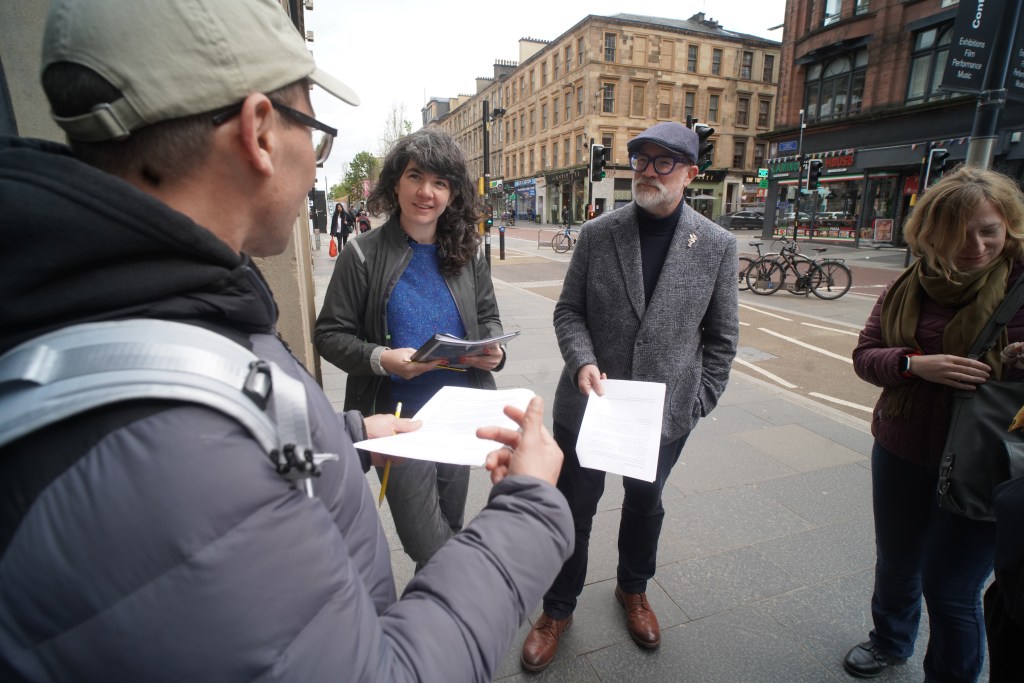
Historians hard at work:
 Radical Glasgow Tours