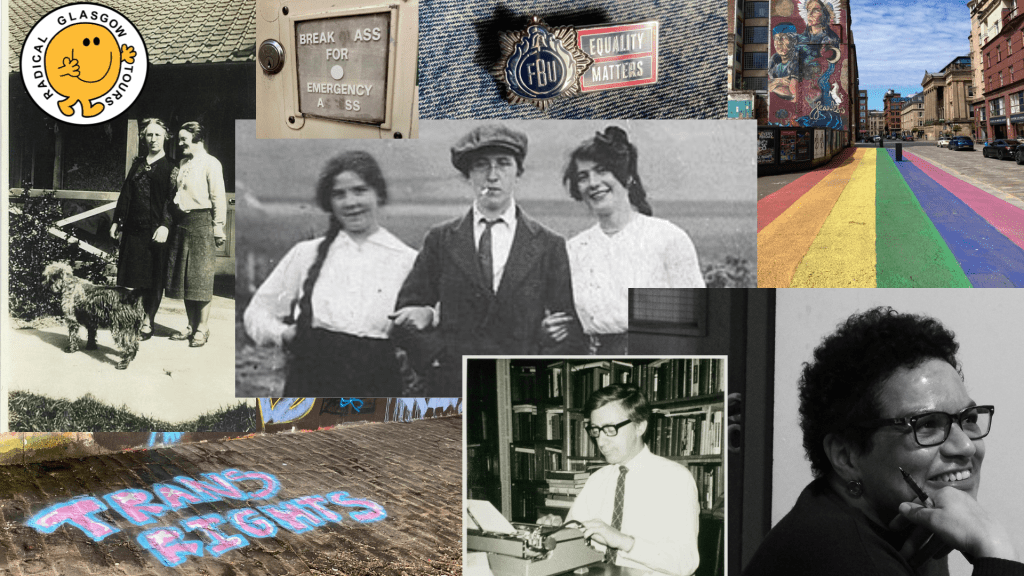
Route: city centre, meeting at the McLennan Arch on Glasgow Green and ending at the Broomielaw/Dixon Street. We adapt the routes every time we run tours depending on roadworks, closures etc. If you’d like to see the map for an upcoming tour drop us a line on radicalglasgowtours at gmail.com. See this page for more information on accessibility on our tours.
A few of the stops on this tour:
Citizens Theatre
The Citizens was known as the Royal Princess’ Theatre until the 1940s – we’re obviously very glad they ditched that – when it was renamed for the People, and as a home for the Glasgow Repertory Theatre. Their manifesto read:
“The Repertory Theatre is Glasgow’s own theatre. It is a citizens’ theatre in the fullest sense of the term. Established to make Glasgow independent from London for its dramatic supplies, it produces plays which the Glasgow playgoers would otherwise not have the opportunity of seeing.”
The Close Theatre Club (1965 -1973)
Theatre Clubs were one way to get round censorship right up until it was done away with in 1968. The Close Theatre stayed open as a space for more ‘experimental’ theatre until it burned down in 1973. Being a hub for actors and theatre types, as well as one of the few places you could get a drink after 10pm south of the River, The Close became one of Glasgow’s unofficial gay bars.
The Citizens is currently under refurbishment, and will reopen in August 2025. If you’re interested in the Close Theatre, there’s a production being made about it now, for performance in October.
Glasgow Cross
Glasgow Cross was the legal and juridical heart of medieval Glasgow, where trials, imprisonments and executions took place. It is also the site of the only known conviction for female sodomy in the UK. In 1625 Elspeth Faulds and Margaret Armour were brought before the Glasgow Presbytery here charged with sodomy. Their punishment was permanent separation under threat of excommunication. Although convictions for lesbianism are almost non-existent in Scotland, it may be that this is in fact a conviction for the crime of being transgender. Certainly ‘appropriating the office of husband’ was a greatly feared crime in Scotland. In 1649 in Glasgow a woman was charged with witchcraft for owning ‘a clay phallus’
109 Trongate
Opened in 1991, the Glasgow Women’s Library moved here in 1994, and the Lesbian Archive joined it at this site in 1995. One organiser, Rachel Gray wrote: ‘I will always remember my first intrepid visit in the mid 90s, stepping out of the 109 Trongate lift into a utopia of women’s words and action. The library had an atmosphere of solidarity and the palpable feeling of agency. Women were important and purposeful here, “Sisterhood is Powerful” rang in my thoughts.’
Margaret Skinnider
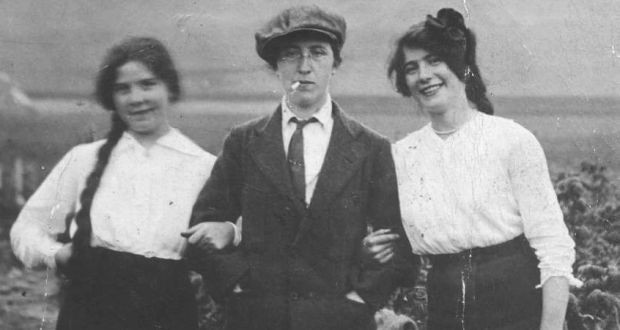
See Stephen Coyle – Margaret Skinnider and Irish republicanism in Glasgow
La Pasionaria
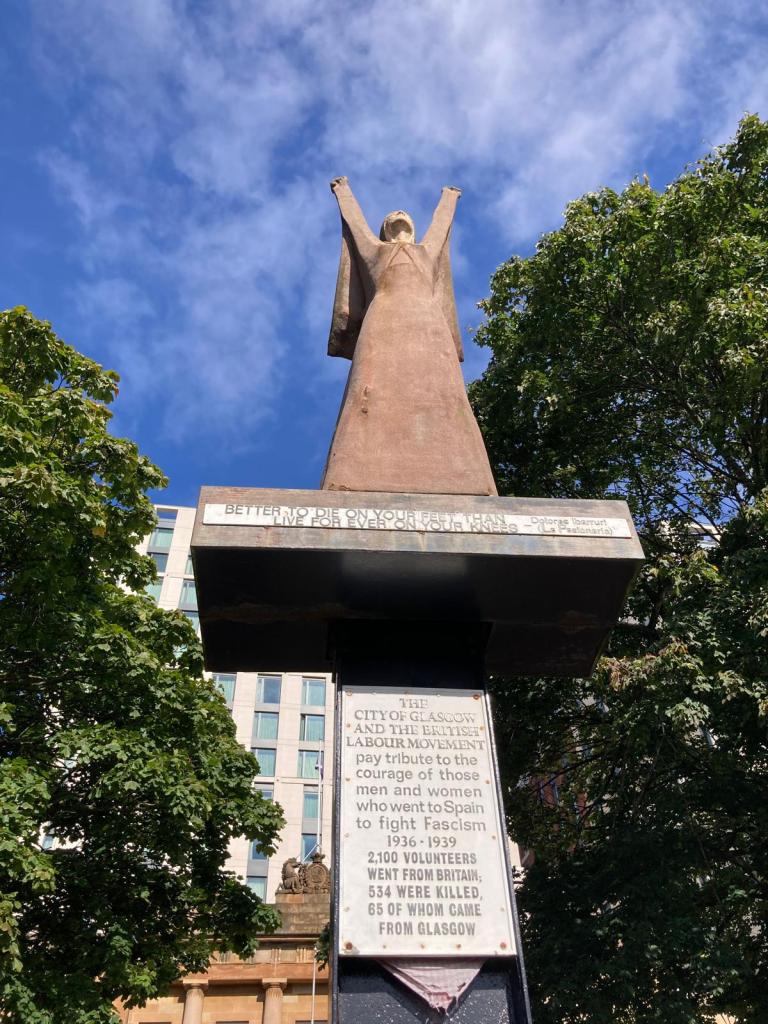
The statue of La Pasionaria is an iconic monument to the young people who volunteered in the fight against fascism in the Spanish Civil War in the 1930s. The statue depicts Dolores Ibárruri, writer, radio broadcaster and secretary of the Spanish Communist Party.
She is also Glasgow’s only statue of a named refugee, spending decades in exile following the victory of Franco’s Fascist forces in Spain. This is one of very few traces of refugee histories in the built environment in Glasgow, and within the under-recorded histories of refugees and migrants those of LGBTQ people are even more hidden. Persecution because of your sexuality is one of the grounds for claiming refugee status, and groups like LGBT Unity which grew out of the sadly missed Unity Centre, provide community and solidarity to queer refugees and asylum seekers in our city.
Queer histories
“We’ve developed this black and white concept of the city’s past, but Glasgow is much more diverse and colourful than dominant histories tend to tell us and that needs to be remembered. They tend to speak about the industrial, working-class Glasgow – the shipyards, masculinity, alcohol. It wasn’t all oil and cigarettes: There are more voices that need to be heard. Despite the horrors faced by gay people in the 1920s to 60s – and the fact that who they were in practice was illegal until the early 80s, some of these men had great fun. It wasn’t a case of misery all the time.”
Dr Jeff Meek, quoted in ‘Meet me at The Knob’ – Recalling Glasgow’s forgotten gay scene and the notorious White Hats
Record your own histories!
Some queer lives and histories are better documented and understood than others: the more marginalised the histories the more difficult sources are to find. This underscores the importance of people recording and documenting their own histories. Think about your own experiences and the things you’re involved in, and explore ways of contributing those to Glasgow’s history in some way.
Queer histories of Glasgow zine
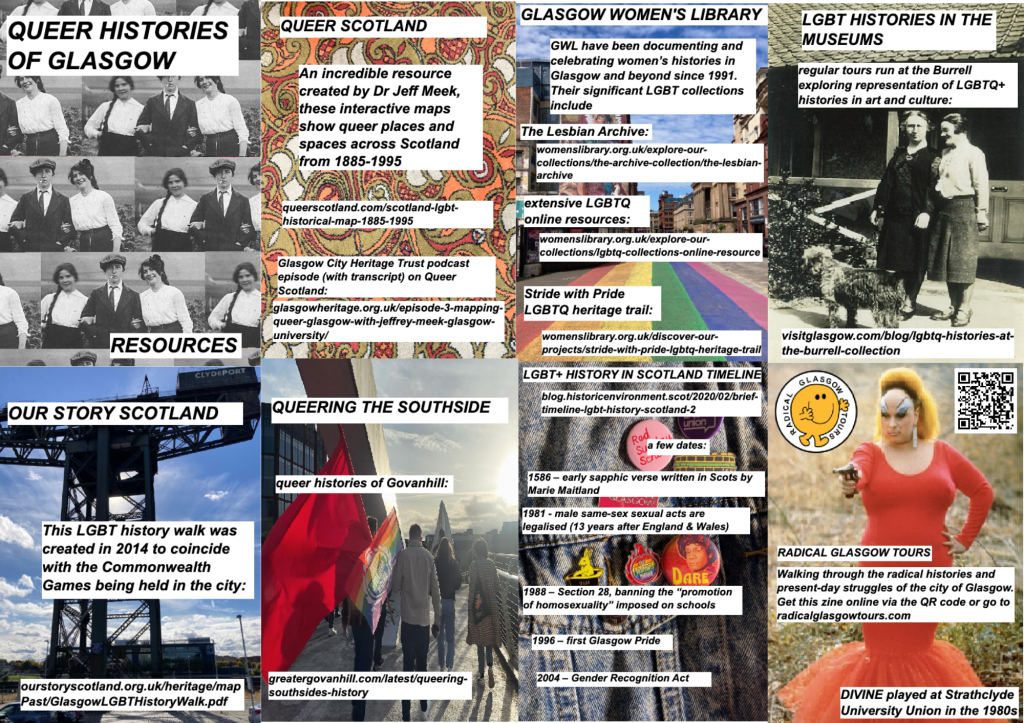
Download, print and freely distribute this zine from our resources page.
QUEER SCOTLAND
An incredible resource created by Dr Jeff Meek, Queer Scotland interactive maps show queer places and spaces across Scotland from 1885-1995
Episode (with transcript) about Queer Scotland on Glasgow City Heritage Trust’s podcast
GLASGOW WOMENS’ LIBRARY
GWL have been documenting and celebrating women’s histories in Glasgow and beyond since 1991. Their significant LGBT collections include
OUR STORY SCOTLAND
This LGBT history walk was created in 2014 to coincide with the Commonwealth Games being held in the city
LGBT+ HISTORY IN SCOTLAND TIMELINE
a few dates from this timeline:
1586 – early sapphic verse written in Scots by Marie Maitland
1981 – male same-sex sexual acts are legalised (13 years after England & Wales)
1988 – Section 28, banning the “promotion of homosexuality” imposed on schools
1996 – first Glasgow Pride
2004 – Gender Recognition Act
LGBT HISTORIES IN THE MUSEUMS
Regular tours run at the Burrell exploring representation of LGBTQ+ histories in art and culture
QUEERING THE SOUTHSIDE
 Radical Glasgow Tours